We are delighted to announce the launch of our first report on the current skills gaps in the European health sector, the result of a collaboration with the European Investment Fund (EIF) and prepared by EY.
The report reveals the urgent need to address skills shortages in healthcare to support innovation and competitiveness. It offers practical solutions and strategies, integrating the perspectives of industry experts, venture capitalists and start-ups.
Faced with technological advances and new healthcare priorities, digital innovation is becoming indispensable. There is an urgent need for a skilled workforce capable of adapting to this ever-changing environment.
📈 What strategies are needed to fill these gaps? The report analyzes five approaches: hiring, outsourcing, training, retaining talent, and mentoring.
Author: joachim
-
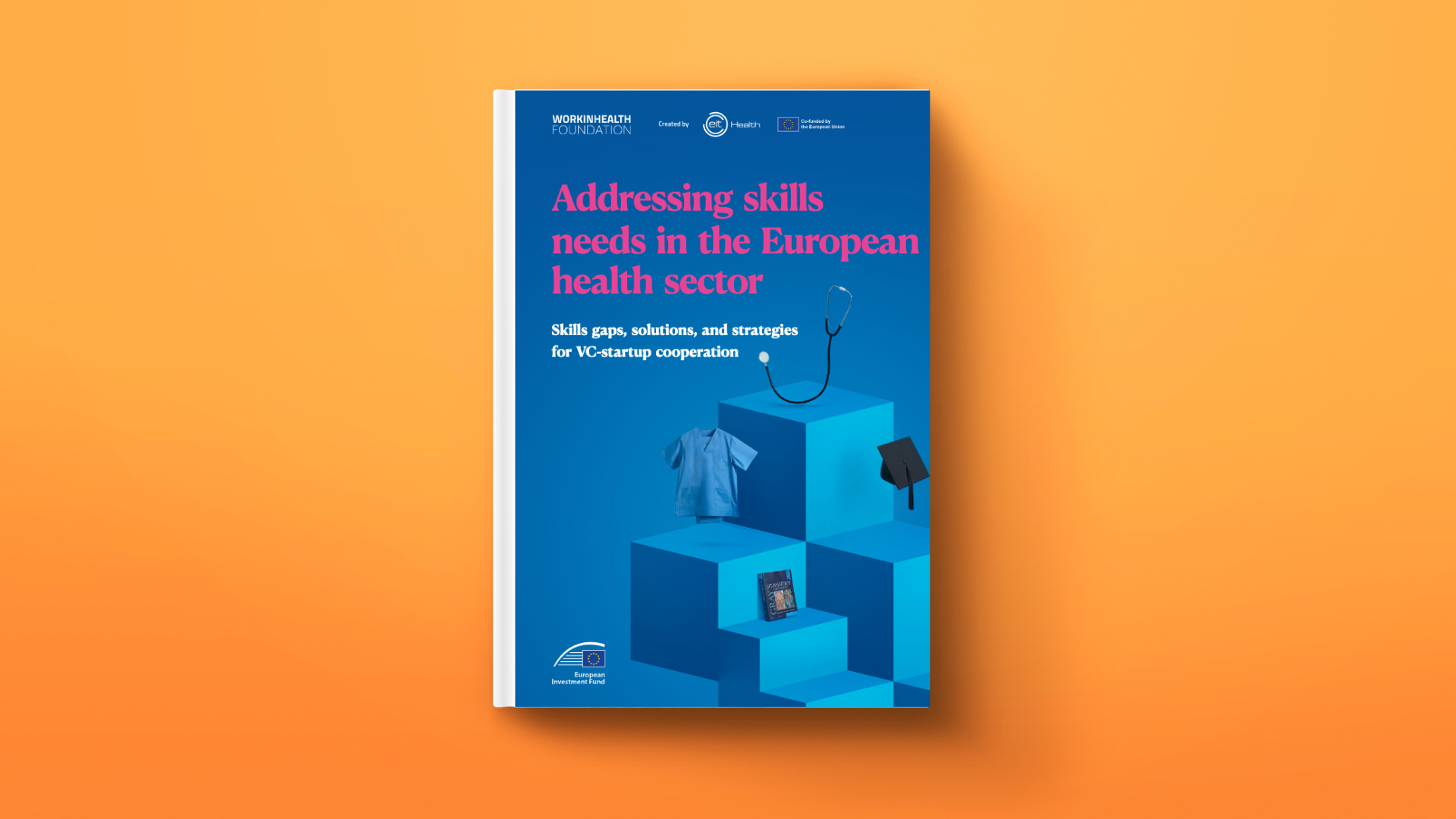
We’re launching our new report: “Addressing skills needs in the European health sector”
-

Empowering healthcare: How Europe can overcome its digital skills gap
As healthcare technology continues to evolve, the demand for digitally skilled professionals is skyrocketing. However, many experts recognise that there is a significant mismatch between the skills required and those possessed by the current workforce.
In Europe, this gap poses a significant threat to the efficiency and advancement of healthcare services. Addressing this gap is not just crucial for technological advancement but also for ensuring quality patient care and maintaining competitive healthcare systems across the continent.
As a result, there is an urgent need to examine the extent and implications of this digital skills gap and what the industry can do to solve it.
The scope of the digital skills gap in healthcare
The digital skills gap is a pressing issue not just in healthcare but across all sectors. According to a report from the World Economic Forum, “half the global labour force might need reskilling by 2025.”
This critical issue is underscored by Alexis Hernot, co-founder & CEO of Calmedica, who provided some alarming statistics: “In France, 40 million people lack digital skills, and even some basic ones such as filling digital forms. Two-thirds of companies declare having difficulties recruiting digital experts.”
This talent shortage extends beyond national borders, affecting all of Europe, as evidenced by a recent report from ManPowerGroup spanning various industries.
These statistics are a stark reminder of the scale of the challenge we face, especially when considering the significant economic value at stake and the potential effects on patients.
According to a report by consulting firm McKinsey, if Europe’s lagging countries double their digital intensity, the continent could add €2.5 trillion to GDP by 2025, boosting annual GDP growth by 1 per cent over the next decade.
Understanding the specific digital skills needed is critical to narrowing this gap, addressing this widespread shortage, and realising the economic potential outlined in these reports.
Identifying key digital skills in demand
Several experts have their opinions on how the digital skills gap in healthcare could be reduced.
Victoria Katona, Innovation Project Lead at GE HealthCare stressed the importance of understanding digital solutions and AI in healthcare. She highlights the need for high-quality practical education in healthcare technology, particularly in Central Europe where she observed the greatest need.
Stephanie Truong, VP Europe at AI for Health, expands on this, pointing out that the complexity of the digital skills required in healthcare is not only technical, but also cultural, as healthcare practices and methods can vary greatly from country to country. She emphasized the need to democratize AI technology and ensure that healthcare professionals are equipped to use these tools effectively.
Christian Chabrerie, Development Project Manager at the French engineering school Epita, also highlights the strong demand for specialists in AI and imaging. He mentioned the introduction of specific training programs in his school to meet this demand, noting that “there is a pull from the market for engineers on AI specifically.”
To address the digital skills gap implementing several strategies is important.
Internal strategies for addressing digital skills gap
GE Healthcare has implemented several strategies to address the digital skills gap internally. Katona explains how integrating IT and medical professionals has been a significant focus. Programs like HelloAI, designed to educate and inspire new talent in collaboration with digital health accelerators and startups, are essential for creating a workforce capable of navigating both the IT and medical domains.
“Our experience is that it’s a hard step for either IT professionals or medical professionals to start moving towards the other direction, but it is a very important step in their careers,” she notes.
Truong emphasizes the importance of practical, user-centric, and patient-centric training to bridge the gap between hard sciences and medical sciences. This approach helps new employees understand the pressures and vocabulary of healthcare settings, making them more effective in their roles.
Hernot also shares this approach, which in his company includes mandatory hospital rotations for new employees to familiarize them with the healthcare environment.
“The gap between hard sciences and medical sciences is real. In our company, any new employee goes to a hospital for half a day, works with surgeons, nurses and doctors to understand how they work, what it feels like to have the pressure of having people coming from all parts of the hospital asking questions at the same time, and also getting a sense of the vocabulary.”
He also explains that “in all software we develop, it’s compulsory to use the medical vocabulary. We don’t use a standard vocabulary; we use the vocabulary that will be used by nurses, doctors, and so on, which, in fact, makes it very familiar for developers and head of product leaders.“
Hernot also notes that internal upskilling of talent is significantly more cost-effective than recruiting new employees and could be an effective strategy for the healthcare industry.
Educational innovations to bridge the gap
Educational institutions are also playing a pivotal role in addressing the digital skills gap.
Chabrerie discusses Epita’s strategy, which includes collaboration with French hospitals to provide real-world training for students. By integrating medical professionals into their teaching staff, Epita also ensures that computer science students are well-versed in the nuances of healthcare, enhancing their ability to work alongside medical doctors.
“I think it’s unique in engineering school, and especially in computer science,” he concludes. “At the end, we have students that can speak with a medical doctor and that makes a difference.”
Encouraging interdisciplinary training and collaboration between engineering and medical fields has yielded positive results, with students gaining a deeper understanding of the practical applications of their skills in healthcare settings, but other issues remain.
Addressing gender disparity in digital skills
Gender disparity is another significant issue within the digital skills gap. In 2021, women represented only around 25% of the engineering workforce in Europe. This percentage is even lower in computer science, with some institutions like Epita reporting less than 5% female enrollment.
Efforts are being made to attract and retain female talent in engineering and IT. “Just to take a real example, we have about 600 students per year and they need to pay for their studies,” explains Chabrerie. “We offered 10 women to study for free. If you remove the barrier of the cost of your studies, you should logically have thousands of people coming, and it’s not the case.”
Cultural challenges remain a significant obstacle in computer science. One strategy discussed involves redirecting female talents who missed entry into medical programs towards digital healthcare majors, leveraging their interest in healthcare. “In France, about 80% of the medical students are women. One of our plans with the healthcare major is to attract the students that barely missed the medical exam and reserve some places in our healthcare major for them.”
Overcoming the talent retention challenge
Retention of talent is another critical challenge. Many European graduates move abroad for better opportunities. Truong pointed out that improving the attractiveness of the healthcare industry in Europe, including better financing and wages, is essential for retaining talent.
Important disparities within Europe also create internal competition. Katona notes that students from Central and Eastern Europe are much more inclined to look for jobs in France or Germany for instance, where the salary is substantially higher.
Katona also adds that remote work opportunities could help retain talent within Europe by offering the flexibility that appeals to many professionals, especially in IT, where most tasks can be performed remotely.
Bridging the digital skills gap in healthcare requires a collaborative effort from industry leaders, educators, and policymakers. By investing in practical training, interdisciplinary education, and targeted strategies to attract and retain talent, Europe can ensure its healthcare sector remains competitive and capable of meeting future challenges. The potential economic and social benefits make this a crucial endeavour for the continent’s future.
-

Bridging the biomanufacturing skills gap in Europe: Insights from experts
The biomanufacturing sector is a cornerstone of Europe’s pharmaceutical and biotechnology industries, driving the development of innovative therapies such as gene and cell therapy. However, the rapid growth and evolving nature of this field have highlighted a significant skills gap that could hinder progress. Addressing this gap is critical to sustaining industrial development and ensuring the availability of advanced therapeutic solutions in the market.
“Biomanufacturing products will account for more than half of the therapeutic solutions in the market within the next five to ten years,” says Karim Vissandjee, CEO of Campus Biotech Digital. The sector’s rapid growth underscores the urgency of addressing the skills gap to ensure these cutting-edge therapies can be developed and delivered effectively.
Challenges in biomanufacturing skills
The biomanufacturing industry faces significant shortages in skills in a number of areas, including regulatory affairs, quality assurance, manufacturing operations, and digital expertise. “In the field of biomanufacturing, we are missing a lot of talent,” says Cedric Volanti, Vice President & General Manager of Viral Vector Services at Thermo Fisher Scientific. “It’s really a source of disruption for the business. We need all types of profiles; very educated people, such as pharmacists, scientists, specialists in regulatory affairs, but we also need logisticians, people that work as operators and technicians in the manufacturing area,” he continues.
Volanti also stresses the importance of regulatory training and GMP (Good Manufacturing Practice) awareness: “It’s not just about manufacturing; it’s about manufacturing under GMP, which requires specific documentation and data integrity skills.”
This complexity requires a multidisciplinary approach, combining skills from different domains to meet the evolving needs of the industry. To address these challenges, industry leaders are implementing a range of strategies aimed at bridging the skills gap and developing a more versatile and skilled workforce.
The industry response to the skills gap
Recognising the urgency of addressing the skills shortage, industry leaders have taken it upon themselves to bridge the gap and cultivate a more capable and diverse biomanufacturing workforce.
As a result, several initiatives have been launched in Europe to overcome the lack of specific training. One of these is the EU Biotech Campus, a multi-operator, state-of-the-art training centre and business accelerator expected to be operational in 2025 near Charleroi in Belgium.
“It should be a key element to secure the development of what is today one of the major economic sectors of the country,” says Didier Malherbe, Chairman of the Board of BCI PHARMA and former CEO of this initiative. “We start from the needs of the industry and then we go to see what training we can offer to create enough candidates to fill the gap,” he explains.
This industry-driven approach ensures that training is directly aligned with the skills demanded by the biomanufacturing sector.
In France, a similar approach called Campus Biotech Digital was created to achieve a similar goal.
“We thought that it was good to have a large consortium building and working together, to see how we can create extremely agile curriculums in order to help all those companies face those challenges,” explains Karim Vissandjee, CEO of Campus Biotech Digital.
For Volanti, long-term solutions also include working closely with universities to create applied master’s programmes tailored to industry needs.
That’s easier said than done, though, because the skills needed in biomanufacturing are often diverse and complex.
In search of a multi-skilled talent pool
The urgent need for specialised training programmes to address the immediate skill shortages in biomanufacturing is clear. “We need help on the short term with specific training in areas like cell culture and purification, along with a strong regulatory aspect, because we are operating under GMP,” notes Volanti.
Developing a specific understanding of quality assurance is also essential. “There is a specific behaviour we need to develop around the quality because, in fact, most of the issues that we are facing are cross-contaminations in biomanufacturing. We need to prepare our future apprentices to work on it,” says Vissandjee.
Another critical skills gap often highlighted by biomanufacturing leaders is in the area of digitalisation, a key area for improving the efficiency, accuracy, and scalability of the production process. “Our aim is to bring the aspect of digitalisation into the core areas and needs of biomanufacturing,” explains Nirlipta Panda, Vice President and Global Head of Industry, Life Sciences at Capgemini Engineering. “We are training more highly skilled candidates who are not just skilled in any one particular area but can bring multifaceted skills with a digital skillset and with regulatory and compliance know-how.” She also notes that technologies such as AI, machine learning, and data science are critical for advancing the sector.
“Digital training, including simulations and virtual reality, can help future learners simulate and adapt to the specific behaviours required in GMP environments,” Vissandjee also observes. This approach can increase the effectiveness of training and attract younger talent to the field, a key aspect for the future of the industry.
Crossing the industry borders
Attracting talent from other sectors is an important challenge for the biomanufacturing industry. “We have to make our job as biotechnologists attractive for the young generation,” explains Malherbe. “We probably need some leaders to attract the attention of young people from other industries to really have the willingness to join biomanufacturing. So we certainly have a big effort of communication to do.”
As part of this effort, strategically tapping into available talent pools could be the key to success. In Belgium, for example, the government’s decision to close all its nuclear power plants has created a void of talent ready to move into new fields. “All the nuclear sector will shut down soon, so we have thousands of people perfectly aware of what safety and security is,” says Malherbe “These people are quite prepared to move to a new sector with a very short-term training program. So we have to be flexible to move people from one sector to another.”
This approach is not a last-resort strategy for the biomanufacturing industry, but a voluntary practice that adds value to the sector. “In fact, you have many sectors with competencies which could be extremely helpful in biomanufacturing,” says Vissandjee. “We are thinking about aeronautics or automotive, where quality is extremely important. And we believe that by adding additional training, we can prepare them to move swiftly to the biomanufacturing area and cover the gap we are facing.”
If answered quickly and with the right approach, many experts agree that the skills gap in biomanufacturing could be a new opportunity for growth rather than a barrier to its future.
Using the skills gap as a learning opportunity
The biomanufacturing skills gap presents a significant challenge, but it also offers an opportunity for innovation and collaboration. “It’s a unique opportunity to open up the industry. And to open the door to digital, to open the door to other industries will enable us to attract good talent to strengthen the biomanufacturing skillset,” notes Vissandjee.
For Malherbe, this culture of openness is not new to biomanufacturing and could be a hidden strength that needs to be preserved: “In my previous job, we welcomed people from the food industry, the distribution industry, and the textile industry, and they are coming with another mentality, an out-of-the-box mentality, which creates a lot of synergies and opportunities to be better in what we are doing.”
By leveraging partnerships, promoting lifelong learning, and fostering multidisciplinary skills, the industry can build a robust and future-ready workforce. But to succeed, the collective efforts of industry stakeholders, educational institutions, and policymakers will be essential to bridge this gap and sustain the growth and innovation of Europe’s biomanufacturing sector.
-

High-value care: Achieving the best patient outcomes while minimizing waste
High-value care aims to achieve the best patient outcomes and satisfaction while minimizing overall costs and unnecessary treatments. It prioritizes patient-centred approaches, efficiency, and long-term sustainability.
However, there are significant challenges in implementing high-value care. These include addressing the generational skills gap among healthcare professionals and encouraging collaboration across various healthcare sectors. Moreover, it is essential to involve patients and citizens in healthcare decision-making to ensure that treatments and innovations meet real needs.
But to get there, we must first change the healthcare paradigm.
Rethinking how we measure health outcomes
Achieving optimal health outcomes remains a significant challenge, largely due to the escalating costs of healthcare and a system that often prioritizes services over patient-centric outcomes.
“The focus in healthcare is to a large extent on services delivered and processes followed, and not on the health outcomes that matter to patients,” says Christina Rångemark Åkerman, member of the Impact Council at Gilde Healthcare.
This misalignment leads to inefficiencies. A report by EIT Health, based on data from the World Health Organization (WHO) and the Organization for Economic Cooperation and Development (OECD), estimates that “around 30% of resources spent on healthcare are wasted on avoidable complications, unnecessary treatments or administrative inefficiencies.”
To truly improve patient health, the focus must shift from the quantity of services provided to the quality and impact of those services on patients’ lives. This requires a comprehensive reevaluation of current healthcare priorities and practices.
Current healthcare payment models are also largely misaligned with the goal of achieving high-value care. As Åkerman points out, “Most payment models focus on the services delivered and not on the health outcomes.” This creates an environment where healthcare providers are incentivized to perform more procedures and tests, rather than focusing on what is truly beneficial for the patient.
By designing payment systems that incentivize high-quality outcomes, healthcare providers can focus on delivering care that genuinely improves patient health. This transition requires redefining the metrics of success in healthcare to prioritize patient recovery and well-being over procedure counts. Such a shift would not only improve patient satisfaction but also contribute to the overall efficiency and sustainability of healthcare systems.
In addition, innovative treatment options such as cell and gene therapies present new challenges in how we measure healthcare outcomes.
“For instance, with haemophilia, if you move from intravenous injections every three to seven days to one gene therapy that will hopefully repair the gene in the body, you need to measure how long this treatment will affect the patient. Will it be lifelong, will it be for a year, two years, ten years? So we need to measure that data and it’s a completely different patient pathway,” explains Thomas Allvin, Executive Director Strategy and Healthcare Systems at the European Federation of Pharmaceutical Industries and Associations (EFPIA). “The key here is to explore new types of partnership models because it needs all stakeholders on board.”
Another pressing issue in high-value care is the allocation of healthcare budgets. Despite the clear benefits of preventive care and health promotion, these areas receive a disproportionately small portion of healthcare funding.
“Resources spent on disease prevention and on health promotion are only around three to four per cent of total health budgets in the OECD countries, while 75 to 80 per cent of the budget are spent on treating chronic conditions,” notes Åkerman.
This imbalance reflects a reactive approach to health care that focuses on treating disease after it occurs rather than preventing it in the first place. Investing more in prevention and health promotion could significantly reduce the incidence of chronic diseases, which currently consume the majority of healthcare resources. By reallocating budgets to prioritize preventive measures, healthcare systems can not only improve population health outcomes but also reduce long-term costs. This proactive approach is essential to achieving sustainable, high-value care, but it’s not the only option.
Four strategies for transformation in healthcare
The transition to high-value care is not just a policy change but a paradigm shift in how we view and deliver healthcare. It requires a comprehensive rethinking of our approach, where the primary goal is the well-being of patients, not just the delivery of services.
Here are four strategies that have been identified by experts:
Reskilling and education
Continuing education and training are critical to adapting to the evolving healthcare landscape. To deliver high-value care, healthcare professionals need to acquire a diverse skill set, particularly in addressing holistic patient needs.
For example, “it is not common for a surgeon to talk about depression with a patient,” says Jan A. Hazelzet, Professor Emeritus in Healthcare Quality & Outcome at Erasmus MC. Yet, when outcomes reveal mental health issues, the care team must ensure these are addressed by qualified professionals. This underlines the importance of interdisciplinary training and teamwork.
Modern healthcare professionals must be “more trained to be a team player than to be an individual who is deciding,” continues Hazelzet, reflecting a shift from individual to collective expertise.
However, Hazelzet notes that medical curricula are updated every seven years, which slows the integration of new topics. He also mentions that the curriculum is often shaped by more experienced professionals who may not fully embrace patient-centred care.
Addressing the generational gap is also a significant challenge when it comes to digital skills among healthcare professionals. Hazelzet acknowledges the potential generational conflict, noting, “If there are older physicians who are not skilled in digital consultation, they should be educated.” Bridging this gap requires comprehensive training programmes that equip older professionals with necessary digital competencies while ensuring that younger, digitally adept practitioners appreciate the value of face-to-face consultations.
Educating healthcare workers to navigate these multifaceted responsibilities is essential for delivering comprehensive, effective, and sustainable patient care.
Public and private sector collaboration
Collaboration between the public and private sectors is fundamental to drive innovation in healthcare and ensure high-value care. Allvin highlights the persistence of silos between healthcare and industry as a challenge to high-value care. For him, “There are many different understandings of value, or what matters to patients.”
This misalignment affects how health systems and payers signal to the pharmaceutical and medtech industries which innovations to invest in. He notes that development processes, especially in pharmaceuticals, require stable, long-term signals from health systems to guide research and investment decisions.
Bridging these silos, he argues, requires a common understanding of value that encompasses what really matters to patients. “The key here is to explore new types of partnership models”, he concludes.
Public-private partnerships, such as the Innovative Health Initiative, co-founded by pharmaceutical companies and the European Commission, are key platforms for fostering such collaboration.
The European University Hospital Alliance, comprising nine hospitals, also demonstrates the importance of collaborative efforts by focusing on outcomes and care paths, initially perceived as the core of high-value care.
By combining resources, expertise, and perspectives from both the public and private sectors, healthcare can advance more rapidly and effectively, ensuring that innovations are patient-centred and sustainable.
Person-centred care
Person-centred care is at the heart of modern healthcare, prioritising the interaction between healthcare professionals and patients. But high-value care goes beyond patient-centred care, and places emphasis on mutual respect for values and needs.
Hazelzet explains, “Despite the fact that we are working on evidence-based medicine, it’s the individual interpretation that is important.”
Personalised care is essential, as standardised treatments do not always align with individual patient needs. For instance, an evidence-based medical recommendation might suggest one direction, but “for this particular patient, it is more wise to decide on direction B,” says Hazelzet. This tailored approach ensures that healthcare is both effective and respectful of individual patient circumstances.
Åkerman points to the Swedish National Cataract Register as a practical example of what this means for high-value care.
The registry is based on a study of nearly 10,000 patients who underwent cataract surgery. The vast majority of these patients had improved vision, but seven per cent of them also reported being worse off in their daily activities than before treatment.
When studying the result in further detail, it was found that these individuals with greater difficulty with daily activities were often older individuals who spent most of their time reading, crafting and doing other activities that depend on strong near distance vision.
“The treatment had restored long-distance vision but many of them had not received reading glasses to support near vision. As a result of that, their quality of life deteriorated following the treatment.”
For her, this example is a strong argument in favour of keeping a more informed discussion with the patient after treatment.
“These types of informed discussions with the patients are key as we are not aiming for more care but for better health.”
Citizen and patient involvement
Involving citizens and patients throughout the healthcare innovation cycle is crucial to addressing unmet needs and improving outcomes. Ania Henley, Public Involvement Advisor at Imperial College NIHR Biomedical Research Centre, argues, “Without citizen and patient involvement, unmet needs will not be defined and therefore outcome that matters won’t be fulfilled.”
According to her, effective patient involvement consists of several stages: identification, ideation, and innovation. During identification, patients help identify social needs and participate in research and scoping exercises. In ideation, they contribute to planning, designing, and evaluating projects, often serving on steering committees. Finally, in the innovation stage, patients assist in implementing, assessing, and disseminating new solutions.
“In the UK, if you get funding from the government, you have to involve patients,” explains Henley. “You cannot get granting unless you show on your grant application how you’re going to involve patients.”
She adds that this principle could be expanded to Europe, as it’s proven to be an effective strategy in the UK. “I think it should become automatic. It has to become the law,” she concludes.
Towards a resilient and sustainable care
The resilience of healthcare systems is a critical component in ensuring that they can withstand and adapt to challenges, such as those presented by the COVID-19 pandemic. Åkerman emphasizes that “being healthy is key not only to the individual but also for the resilience of the health systems.”
She also highlights the ability of healthcare workers to perform their duties without experiencing burnout as a crucial parameter for maintaining the overall effectiveness and efficiency of healthcare delivery. By focusing on resilience, we can create a system that not only responds to crises but also maintains a high standard of care under normal conditions.
This includes ensuring that healthcare environments are supportive and sustainable, which in turn makes healthcare a more attractive and viable career option for professionals. Ultimately, resilient healthcare systems are better able to provide continuous, high-quality care to patients, regardless of external pressures.
High-value care is achievable, but it requires dedication, collaboration, and a relentless focus on quality and patient satisfaction.
-
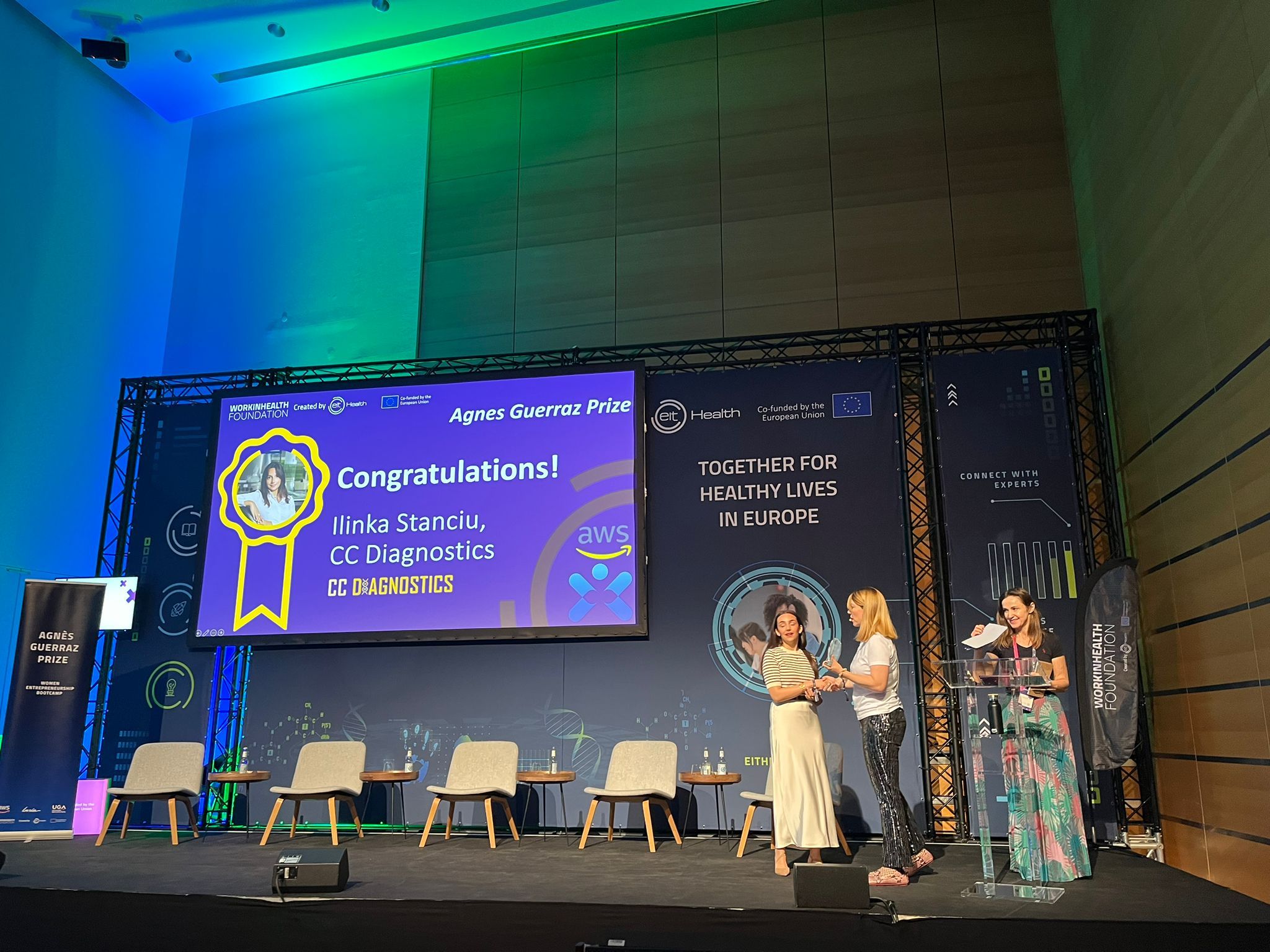
CC Diagnostics wins the 2nd edition of the Agnes Guerraz Prize
The ceremony for the 2nd edition of the Agnes Guerraz Prize took place this afternoon at the health.tech conference in Munich.
Congrats to CC Diagnostics which wins the €10,000 grant and US15,000 AWS cloud credits!
Represented by Ilinka Stanciu, Quality Assurance Manager, CC Diagnostics develops early-stage cervical cancer diagnostics based on epigenetic markers.
The Prize was created in 2023 to honour the memory of Agnes Guerraz, renowned researcher in AI, deputy Director of innovation and tech transfer at Inria and director of the Tech Transfer Office at Université Grenoble Alpes.
It rewards a women healthcare entrepreneur from the EIT Health Women Entrepreneurship Bootcamp.
Thanks to the partners financing the prize: Université Grenoble Alpes, Inria, Amazon Web Services (AWS).
And the Women Entrepreneurship Bootcamp partners : University of Galway, Instituto Pedro Nunes, IESE Business School.The inaugural Agnès Guerraz Prize was awarded last year to MiMARK.
-
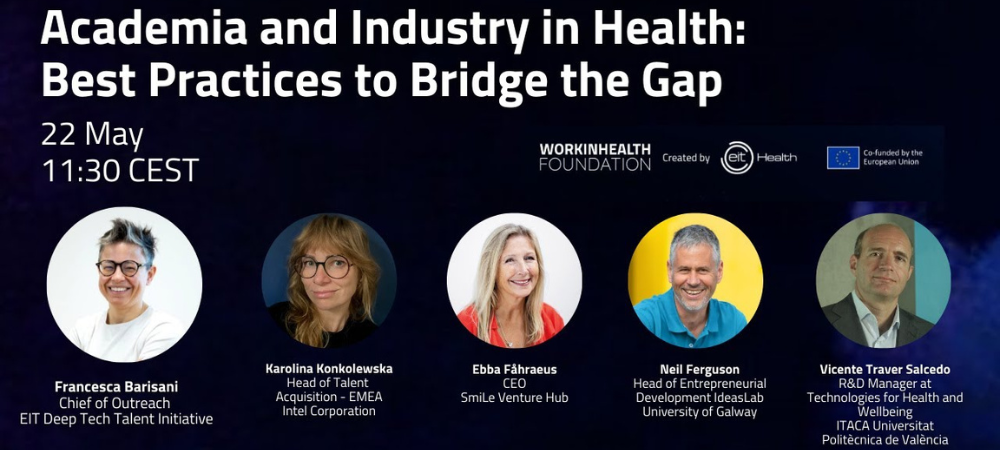
5th WorkInHealth Career Fair: Best practices to bridge the gap between academia and industry in health
On the first day of the WorkInHealth Career Fair, EIT Deep Tech Talent Initiative Chief of Outreach, Francesca Barisani, hosted an insightful panel session on “Academia and industry in health: Best practices to bridge the gap” that discussed the main challenges researchers faced when they move from the world of academia to industry and entrepreneurship, critical future skills entrepreneurs need, the role of incubators, and the benefits of collaborative partnerships between academia and industry.
Francesca was joined on the virtual stage by four university and industry representatives from our Pledger Community and Advisory Board:
Karolina Konkolewska, Head of Talent Acquisition – EMEA, Intel Corporation, Poland
Putting the silicon in Silicon Valley, Intel Corporation is an industry leader, creating world-changing technology that enables global progress and enriches lives. Intel’s purpose is to create technology that improves the life of every person on the planet, by applying their reach, scale, and resources to enable customers to fully capitalise on the power of digital technology.
Ebba Fahråeus, CEO, SmiLe Venture Hub, Lund, Sweden
SmiLe Incubator AB is a leading, non-profit venture hub that specialises in helping early life science companies develop their business ideas and build successful companies within MedTech, BioTech, e-Health, Diagnostics and FoodTech. It offers top-of-the-line business coaching, educational programmes, access to a large international network of investors and industry experts as well as access to a unique lab infrastructure consisting of eleven in-house laboratories with state-of-the-art instrumentation.
Neil Fergusson, Head of Entrepreneurial Ideas Lab, University of Galway, Ireland
The University of Galway is a prestigious and vibrant higher education institution based in Galway on the west coast of Ireland, an area that is recognised as a tech and MedTech hub for excellence. The university itself, is home to cutting-edge research centres and institutes, contributing to advancements in fields such as biomedical science, marine science, information technology, and sustainable energy. Additionally, the university actively engages in collaborative research projects with national and international partners, creating a dynamic research ecosystem.
Vicente Traver Salcedo, R&D Manager at Technologies for Health and Wellbeing – ITACA, Universitat Politècnica de València, Spain
Vicente is a member of our Advisory Board. He is also a member of the Academic Board for the inter-university Master on Biomedical Engineering at Valencia, and co-ordinator of the cluster Healthy Living, which combines six different R&D university groups working in the field from different approaches. With over 20 years expertise in digital health, Vicente has participated in more than 80 EU, national or regional funded projects, published more than 120 publications in national and international journals and has been the invited speaker at many seminars and conferences.
More info here.
-
Join the 5th edition of the WorkInHealth Career Fair
On the 22nd and 23rd of May 2024 from 9 am to 6 pm, the WorkInHealth Foundation will hold the fifth edition of its Career Fair, a pan-european online event connecting talents to recruiters to remediate the healtcare sector talent crunch.
The first fourth editions of this event already brought together :
- 970+ talents from all over Europe.
- 50+ companies actively recruiting from Digital Health, MedTech and Biotech and from big industrial groups to start-up.
- 370+ 1to1 meetings between talents and recruiters.
- 230 + position opened.
This career fair was created based on the idea that the future sustainability and growth of the sector is highly dependent on the ability to attract, upskill, retain and reskill talent. Although talent shortages exist across the board, there are particular skillsets where new and emerging roles are leading to exponential demand such as in digital, commercial, and innovation settings.
Why attend as a talent ?
- Be aware of the opportunities the healthcare sector can provide to a talent like you.
- Build up your network with strong and leading European healthcare actors.
- Find an internship, a first job, your next career move
- Get a better understanding of your role in the sector.
- Plan One to One Meeting (30 minutes) with recruiters.
Why attend as a recruiter ?
- Increase your presence as a leading recruiter among the European talent community.
- Connect with academic institutions and their students and alumni.
- Plan One to One Meeting.
- Meet talents & Alumni from EIT Health and WorkInHealth community from all over Europe.
- Organise 30 minutes meetings with any other stakeholder to promote your internships, graduate programme, work culture, corporate brand, etc.
-

How to attract young talent to the healthcare industry
In today’s rapidly changing world, the biggest challenge the healthcare sector faces is a shortage of talent. According to a 2023 survey by the business services firm PwC, 82% of health industry executives rank talent acquisition and retention as the biggest risk to companies in the healthcare sector.
To meet the rising demand for skilled workers, the healthcare industry needs to attract young talent. However, this sector is known for being slower in adapting to change when compared to other sectors.
This can lead employers to miss out on a large portion of the talent pool.
One of the main challenges when it comes to attracting young talent is that there is often a mismatch between the expectations of employers and employees — a mismatch that is driven by a job market in constant flux. For example, young recruits are increasingly expecting job benefits such as remote work options, flexible working hours and a company culture that prioritises work-life balance.
So what can the industry do to match the expectations of young talent and make itself attractive to prospective recruits?
To find the answers, it is crucial to listen to what the next generation of healthcare workers have to say.
Embracing diversity
As the healthcare industry evolves, so do the jobs. However, recruiters in healthcare are typically used to looking for talent with a very specific background and career path.
Fortunately, this is starting to change.
“It’s no longer difficult to justify how an engineer or a data scientist can help a doctor or a healthcare organisation,” says Sara A. Pedraz, who has a PhD in communication, gender and medicine. She now works with healthcare and pharma organisations to implement digital transformation and business innovation strategies.
Pedraz points out that the industry still has work to do in order to welcome a wider variety of educational backgrounds and career profiles, such as artists, philosophers or communication specialists, especially in innovation departments.
This challenge goes further than just looking for candidates with a broader array of skills. Pedraz says that the industry still needs to improve its ability to utilise the skills of these diversified profiles to ultimately deliver a positive impact to patients.
Recruiters need to understand that the path to a healthcare position is not linear. Diversifying your talent acquisition pool is not only a strategy to meet talent needs, but also benefits organisations that might have previously been missing out on great additions to their team.
Investing in communication
A common mistake of healthcare organisations is focusing their communication efforts strictly within their sector.
“Sometimes we are looking a lot at ourselves and only communicate to our peers because we have a common language and standard practices,” explains Pedraz. “We need to eliminate that barrier and start integrating new means of communication to be more appealing to people that are willing to collaborate with us.”
She believes that companies need to improve their ability to communicate what they do to people without a medical or technical background, and to clearly explain what real-world needs drive their mission.
The data supports that communicating your mission upfront can make a huge difference when reaching out to prospective employees. According to BioCentury’s Talent Survey 2022, the number one motivation for first-time job seekers to join the biopharma industry is the mission to treat and prevent disease. A favourable work-life balance and monetary compensation are ranked second and third, respectively.
Jean-Baptiste Michel, Business Development Manager for healthcare procurement firm Medikabazaar, decided he wanted to work in healthcare after taking part in a training program for a medical technology company.
He explains that, as a business student without a scientific background, it was not obvious to him that he could have an impact within the healthcare industry.
During his time at university, Michel launched a podcast about entrepreneurship in healthcare called Entreprendre dans la santé. Having interviewed over 80 healthcare entrepreneurs for the podcast, he observed that the organisations that managed to successfully attract and retain talent are those who share a clear vision and are vocal about how many opportunities there are in healthcare for people of all backgrounds.
“We need to share concrete stories from people without a medical background who work in healthcare, and share how much they are benefiting the sector,” Michel says.
He believes spending time in the field, directly in contact with patients and healthcare professionals, can make people understand how these jobs can have a direct impact on people’s lives.
“I think this is a value that you cannot find in other industries, and that’s what made me want to pursue a career in healthcare.”
Rethinking education
A big challenge for the healthcare sector is that the education available to medical professionals is currently insufficient.
“What we’re seeing currently in medical education is what we can describe as a lack of education about soft skills like communication and leadership,” says Nick Xifaras, former President of the European Medical Students’ Association (EMSA).
A survey by the EMSA revealed that this is one of the biggest issues facing medical education right now, he adds. “It was shocking to see how few medical students think they are adequately provided with the skills and experience to deal with health leadership and to communicate with the system that employs them.”
“This is something that is desperately needed in medical school, and something that we have been raising our voice about, but it is a very difficult system to change,” he says.
Xifaras explains that there is often a gap between people who are good educators and people who are good doctors. He advocates for medical education to be led by trained instructors who can teach both hard and soft skills, and are capable of guiding students in tailoring their academic curriculum to meet industry needs.
This last step is essential, especially given that there is currently a substantial disconnect between the education medical students receive and the realities of employment in the healthcare workforce. For example, in another EMSA survey, 53% of medical students reported that their digital health skills were ‘poor’ or ‘very poor’.
“This is very concerning and something that definitely needs to be addressed,” adds Xifaras. “However, I don’t think that most medical schools in Europe have a good strategy in place to change this situation.”
As a response to the shortcomings of academic education, some students have been taking the reins of their own education by creating initiatives that provide mentorship, hands-on training and workshops designed to help prepare students to face the real world.
One example is Nucleate Bio, a non-profit founded by Harvard students in 2019 that now runs training programs across 20 locations in North America, Europe and Asia.
Michel believes there is currently an opportunity for healthcare organisations and educational institutions to come together and create learning programs that truly cater to the needs of the industry.
“Sometimes what we see at school is so far away from the realities of the field,” he says. “What I would like to see more in education is students going into the field. This would be very beneficial to understand what the problematics of the sector are.”
Adapting to the times
When taking action to make the healthcare industry more welcoming to young talent, one of the biggest challenges is that the sector has historically been slow to adapt to change.
This industry has been doing things the same way for years, sometimes even for decades, notes Pedraz. And while change is necessary, she believes young talent can sometimes be overly impatient and expect change to happen faster than is actually feasible.
In the healthcare sector, enacting change can typically take a couple of years longer than it would in other sectors, she says. “Things are moving forward slowly, so you need to be committed to becoming an agent of change.”
To facilitate this transformation, she believes the industry needs to flatten its hierarchy. This will give a voice to people from different backgrounds who seek to help the industry grow and evolve.
Ultimately, Pedraz, Michel and Xifaras all agree that the number one thing the healthcare industry needs to be doing is being more proactive in putting itself out there and sharing its mission with the world.
“We hear a lot about the tech industry, but we don’t hear enough about healthcare,” says Michel. “We need to make the impact of what we do understandable for everyone, not just to talent, but also to society as a whole.”
-

How health tech startups can overcome the talent shortage crisis
The healthcare industry is facing a massive talent shortage. While the broader job market is now starting to recover from the ‘great resignation’ that followed the pandemic, turnover rates in the healthcare sector are still above 2019 levels.
Among all the stakeholders affected, health tech startups are facing the biggest challenges when it comes to talent acquisition.
“The pandemic thrust the life sciences very much front and centre as a hot topic, and we’ve seen that in terms of the number of startups coming onto the scene,” says John Bethell, Director and co-founder of LUKA BIO, a recruitment firm specialising in life science and biotech startups.
“One of the problems with fast-growing sectors is that the supply of highly skilled talent doesn’t often keep pace with the demand,” he added.
Hiring the right people can make or break any startup. Health tech startups face the additional challenge of looking for candidates with a very specific set of skills, often at the intersection of biology and technology. This means they have a very small talent pool to tap into.
“These companies have the need for a skill set that either does not exist in the market or not at the volume that you really need to supply the entire startup ecosystem,” Bethell explains.
In addition, health tech startups have to compete for this scarce talent pool not just with well-established firms in the healthcare sector, but also with tech companies across all other industries.
This competition gets even harder when funding is also scarce. In 2023, funding for digital health startups hit the lowest levels since 2019.
To survive in such a bleak market, these startups need to evolve along with the changing landscape and hone in on their talent acquisition strategies.
Hire like a pro
Founders of health tech startups often get training on marketing skills and on how to pitch to investors. However, they don’t typically get trained on how to recruit systematically.
“My first and most pointed piece of advice to startup founders is: learn to recruit,” says Bethell.
Learning to use ‘proper’ recruitment tools is the first step. Bethell considers it is a big red flag if a founder solely uses Google Docs and their inbox as their recruitment tools.
“There are plenty of really cheap, excellent, easy to use, easy to implement tools that not only will make your process more efficient and more effective, [but] they’ll also teach you how to recruit because they enforce having a process in place.”
A key skill that startup leaders should learn is how to identify and reach out to potential candidates. However, this remains outside the comfort zone of many startup founders.
“This notion that you can rely on advertising is a very antiquated one in this day and age. If you have specific skills that you need to bring into your business, you need to go out and look for them,” Bethell explains.
He adds: “At any given time, only 20% of the potential talent pool is actually looking for a job, and usually the best people are not looking for a job anyway because they’re happy and functional and successful where they are. You need to take that leap and actually reach out to people.”
Startups also have to come to terms with the fact that the perfect candidate with all the qualifications and experience they are looking for may not exist. A candidate’s attitude can be a much better predictor of their future performance than their experience, says Bethell.
“A person who has less experience but a better attitude will outperform an experienced but less motivated employee every time. Looking outside the box and taking a risk on people who have the right attitude and cultural fit is always a good idea.”
Finally, looking after all candidates during the recruitment process is also essential to cultivate the company’s reputation and establish a successful hiring strategy in the long run.
“If you have 50 applicants and you hire one, that’s 49 people who are going to be rejected by you. If you don’t do that well, that’s 49 people that are going to say bad things about you in what is almost inevitably a very tight market,” says Bethell.
Adapt to a remote work culture
The Covid pandemic has led to massive shifts in the way recruitment is done in the industry. One major change Bethell has come across is that candidates are increasingly reluctant to relocate for a new position.
“When there’s talent shortages, the candidates have the power,” he says. “This is putting pressure on startups, and all employers now have to seriously consider remote employment as an option.”
This often means not just remote work but also remote interviews. During and after the pandemic a lot of startups had to start working with new hires without ever having a chance to meet them in person and getting to know each other. And without a proper system in place, remote interviews can make the whole recruitment process much longer.
“One thing that I learned over the years is that recruitment is a process that works best when it moves swiftly,” says Bethell.
While implementing remote recruitment and work options can be challenging, it can also help startups access a larger talent pool with a more diverse set of skills and personal experience.
Grow along with your talent needs
Over the years, the talent needs of a startup naturally grow and evolve. This is a key factor that founders and managers need to take into account early on so they can be ready to create and fill new positions as their company’s needs change.
“It is a cliché, but it’s very true: the life sciences is first and foremost a people business,” says Stephan Christgau, Managing Partner at life sciences investment firm Eir Ventures.
Investors like Christgau will take a close look at a startup’s team when deciding whether to invest in them. They often look for a team that is diverse in terms of expertise and has a balance between scientific knowledge and the ability to ‘get stuff done’.
“We’re looking for an experienced and balanced team, with as many areas of expertise covered as possible, but we accept that in the early stage companies will have small teams,” says Christgau.
“However, you have to be aware of which areas of expertise you want to expand into, and have a plan for how you’re going to engage those competencies to get the company where you want to.”
Retain your top talent
“Once a talented person has committed to join your business you want to make sure you keep them,” says Rowan Gardner, serial entrepreneur and co-founder of health tech startup PrecisionLife.
Talent retention is a priority for Gardner — and it should be for any health tech startup given the amount of money, time and resources it can take to find the right candidate and onboard them into their new position.
She believes that to retain employees, it’s important to make sure they find satisfaction and enjoyment in their work and to give them a sense of what their development potential is within the organisation.
For example, PrecisionLife has teams that work in sprints — a short period of time where a specific set of tasks have to be completed. During each sprint, a different member of the team will take the lead, meaning everyone gets an opportunity to develop their leadership skills and gain first-hand appreciation for the challenges of leading a team.
“The wonderful thing of working in a startup, as opposed to a much larger organisation, is there’s a much stronger relationship between the work you do every day and the progress that a business makes,” Gardner explains.
“Not everyone can be a manager or have a long job title, but you want to develop the sense of ownership and responsibility for delivery within the organisation.”
Build an attractive company culture
Ultimately, creating an outstanding company culture can be the key to both attracting and retaining highly skilled talent, says Gardner.
Company culture consists of a set of principles that everyone in the organisation shares. Making them explicit helps employees understand what’s expected of them and — if done right — can make people proud of working for the company.
“I’m always delighted when people bring culture to the forefront because it really tells me that they’re going to care about their people and think about making them a priority,” says Bethell.
He sees recruitment as a war for a scarce resource — skilled talent — and company culture as one of the most effective weapons to fight with.
It may have become a cliché in the business world, but there is a lot of truth to the saying “culture eats strategy for breakfast,” according to Gardner. The best hiring strategy will lead nowhere if there isn’t a company culture in place that makes employees want to work for you.
Altogether, recruitment is a multifaceted challenge that all companies have to face. Upgrading your recruitment skills and following the advice of experts can only get you so far, concludes Gardner, because at the end of the day, a business has to be worthy of great talent in order to attract and retain it.
-

The healthcare sector needs to take action now to overcome its talent shortage
The healthcare industry, still recovering from the Covid-19 pandemic, will be facing unprecedented levels of transformation in the coming years. To keep up with a rapidly changing world, the sector needs to deal with a huge challenge — a scarcity of talent.
Hiring and retaining talent has long remained an issue for the healthcare industry worldwide. If the current trends continue, the World Health Organization estimates that by 2030, there will be a shortage of 10 million jobs in healthcare.
“The health sector is currently not sufficiently attractive for talents and graduates,” explains Celine Carrera, Chair of the WorkInHealth Foundation and Director of Innovation & Transformation at EIT Health.
According to Forbes’ World’s Best Employers 2023 survey, the first pharmaceutical company that can be found in the list, Pfizer, only ranks at number 25.
“If Europe is to maintain a vibrant and viable healthcare sector that can lead to innovation, we must rise to the challenge of recruiting and educating the best talents,” adds Carrera.
A large scale issue
It’s not just healthcare. The worldwide job market is going through massive shifts. The World Economic Forum’s Future of Jobs Report 2023 predicts that 69 million new jobs will be created by 2027, while 83 million will be eliminated.
An additional challenge for the healthcare industry is the speed at which new technologies are created, particularly when it comes to manufacturing pharmaceuticals.
According to a McKinsey study, the main disruptors are new product modalities (such as cell and gene therapy), digitalization and advanced analytics. Together, these disruptors have created an 80% skill mismatch in pharma manufacturing. However, executives only perceive 10% of the disruption that frontline employees experience.
In particular, artificial intelligence and automation technologies will have a big impact on the healthcare workforce. The study estimates that 50% of existing work activities in the pharmaceutical and medical manufacturing industry could be automated, which will lead to many jobs being eliminated — and many more to be created.
Altogether, more than 90,000 jobs in the industry are expected to disappear between 2020 and 2030, while up to 120,000 new jobs could be created.
Manisha Singh, CHRO Advisory and EU HR Consulting Leader at Wipro, has worked extensively with healthcare and life sciences clients to develop talent acquisition strategies. She believes that unless industry leaders work to define what roles will be required in the future, the sector is not going to be ready for this transition.
“One thing for sure is that the job market is dynamic, uncertain and volatile. Not just for us employers but also for us as employees. None of us knows what’s going to happen next,” says Singh.
“Since the scale of the problem is huge, it makes tremendous sense for all of us to come together and think about innovative ways of rescaling.”
Insufficient training programs
According to Singh, the European healthcare sector has reported a gap of 40% between the skills it needs and the skills it can find.
Employers need to provide training to bridge that gap; both to help employees improve their performance at their current position (upskilling) and to train them to take on a new position (reskilling). However, the sector is significantly lacking in its training efforts to this date.
When it comes to upskilling, digital skills are the most urgently needed in the healthcare industry. According to GE Healthcare’s Reimagining Better Health 2023 report, clinicians identified technology skills as the first critical skill they want to learn, and 45% of clinicians reported not receiving adequate training to use available medical technology to its full potential.
“The healthcare sector needs to impart some basic digital native skills to all its workforce and it’s lagging behind in that area,” says Singh.
Meanwhile, reskilling will be essential to keep up with the speed at which new skills and jobs are created, many of which didn’t even exist before. The Future of Jobs Report 2023 estimates that 22% of jobs in the healthcare sector are created and destroyed every 5 years — a figure that is expected to keep growing in coming years.
However, only a third of pharma companies surveyed by McKinsey have launched reskilling efforts, and those who did cover less than 10% of the workforce.
There is now a growing demand for flexible and customizable training programs that allow employees to get official credentials while working. These kinds of programs would make learning new skills accessible to a larger portion of the workforce.
Outdated recruitment strategies
Historically, the healthcare sector has focused on hiring talent that was already trained, with quite narrow requirements for career and education backgrounds. However, this approach is currently proving insufficient to find the amount of qualified talent that the sector needs.
Employers need to start rethinking their hiring strategy.
“Often, this starts with how entry-level jobs are positioned,” writes Rya Conrad-Bradshaw, VP, Corporate Markets, Workforce Skills at Cengage Group. “In today’s labor market, talent can easily find competitive salaries and benefits in other industries, so benchmarking salaries and benefits against entry-level roles across other industries, as well as marketing the benefits and future career path of healthcare roles, is important to be competitive.”
Traditionally, hiring managers have required candidates to have certain types of work experience or hold specific university degrees. However, with the right training and onboarding, workers coming from a much wider range of backgrounds can be strong candidates to fill an open position, says Conrad-Bradshaw.
In addition, universities have been slow to create training programs that satisfy the rapidly changing workplace demands. This means it’s now often up to employers in the healthcare industry to offer their own accredited training if they want to meet the rising demand for skilled workers.
“Training should focus on what the industry really needs on the field, and the training programs should be designed to ensure the skills match the expectations of the labor market,” says Singh.
Eliminating some of the traditional criteria to hire talent, such as university degrees, could open up the healthcare industry to a much larger talent pool. Together with providing flexible training and remote learning and work options, updating the industry’s approach to hiring will attract talent from other sectors and result in not just a larger but also a more diverse workforce.
“Diversity is not just a nice thing to have. It’s essential for business and society to thrive,” says Singh. “We are responsible for taking systemic action to ensure everyone has equal opportunity in this future of work.”
Taking action now to prepare the future workforce
It is more evident than ever that the healthcare industry needs to urgently take action in order to catch up with the demands of a rapidly changing job market.
“We need to massively upscale the workforce if we want to move to a person-centered, value-based model. This will be a major cultural shift for the sector,” says Claire Nassiet, Venture Lead at the WorkInHealth Foundation.
She goes on to say that cross-industry collaboration — including public and private partnerships and altogether involving all kinds of healthcare stakeholders — will be absolutely necessary to tackle the current talent shortage.
The European healthcare sector, in particular, still has additional work to do to catch up with other regions, such as the US. McKinsey has reported that European R&D and commercial talent is almost on par with the talent available in the US. However, biotech executives and investors believe that Europe still lacks talent with an entrepreneurial mindset.
“There is an urgent need for health systems to attract and retain skills and valuable talents, for example by developing flexible and exciting career paths and clear routes to healthcare leadership roles,” adds Nassiet.
Making healthcare a more attractive sector to work in should be a big focus of marketing efforts to grow the talent pool. This will involve communicating the value and the impact of the work carried out by healthcare professionals.
While the Covid-19 pandemic has driven rising costs and major shortages of qualified workers across the healthcare sector, stakeholders can also take advantage of the increased awareness it has brought to the importance of a thriving healthcare industry.
“We have momentum here,” says Nassiet. “The pandemic may have changed the way the public sees the health sector, and we should leverage this to increase its attractiveness.”
As outlined above, shifting the work culture to focus on lifelong learning will allow the existing talent to grow and adapt to the evolving requirements of the market. This cultural shift will also need to embrace more flexibility when it comes to empowering talent to move between sectors and gain new skills.
“We have a huge chance to open up the sector now,” concludes Nassiet. “We need to accept diverse sets of skills and profiles if we want the health sector in Europe to flourish.”